

'Messidrome' Organic Garlic (Autumn Planting)
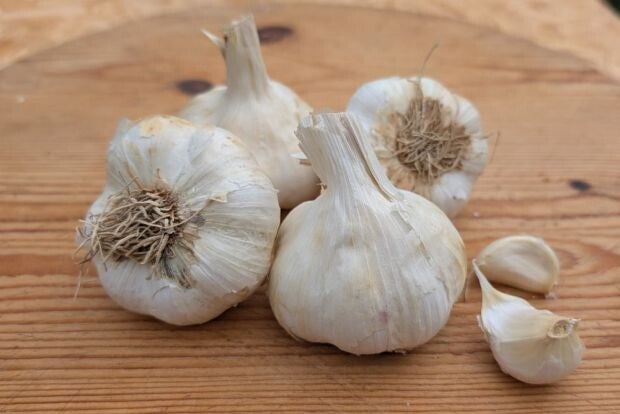
Organic Messidrome Autumn Planting Garlic
Overwintering planting garlic, a soft neck variety with large white bulbs. Messidrome is long recognised as an excellent culinary garlic for all uses.
Hardneck varieties are more suited to cold climates, whereas softneck varieties tend to thrive in warmer environments. Ireland has a mostly temperate climate year round and with a bit of care, both soft or hardneck can be grown successfully in most places.
Growing Schedule: Garlic enjoys a long growing season, it's best planted in the Autumn months however it can be planted from September through to January. Requires cold conditions to develop. Highest yields will come from autumn plantings. Harvesting June - August.
Planting Depth/Distance: Garlic is planted from bulb segments (cloves), so break up the bulb carefully into individual segments prior to planting. Make sure that the cloves are planted the right way up: the flatter basal plate should be facing downwards. Allow 15cm between individual cloves and 30cm between rows. Plant the cloves so the tips are 2.5cm below soil surface. Deeper planting can encourage better yields on light soils, but do not plant deeply on heavy soils.
Growing Conditions: Choose an open, sunny site and well-drained soil. Prior to planting, improve the soil’s structure, moisture retention and nutrient levels by incorporating organic matter. During the growing season, garlic appreciates consistent moisture, but it's important to avoid overwatering, as garlic bulbs can rot in waterlogged soil. Keep well weeded - garlic doesn't like competition. It will also allow better air circulation through the crop. When the first six leaves have turned yellow, lift and dry in the sun or in an airy shed.
Average number of bulbs
- 250g = 3-5 bulbs
- 1kg = 15-20 bulbs
- 10kg = 150-200 bulbs
(You will separate each bulb into several cloves which you plant individually. Approx. 8-12 cloves per bulb)
Reducing Disease in Garlic
Rust:
- Infection is worse on nitrogen-rich soils with low potassium, so take care with fertiliser applications.
- Do not crowd plants, as this raises humidity and increases the likelihood of infection.
- Keep well weeded.
- Dispose of all plant debris at the end of cropping.
- See Herfomyc - this is effective against any fungus on herbaceous plants. It also acts as a foliar feed so will strengthen the plant as well.
Disease Prevention (General):
- Watering: Don't water in the evening/night as this moisture will linger overnight and allow the perfect environment for fungus to creep in - water in the morning so the plants can dry out throughout the day
- Soil: If you have heavy clay soils, you can do things like add sand, compost, and plant your garlic in mounds.
- Tools: When dealing with any type of plant disease it's important to sterilise your tools/materials that came into contact with it.
- Crop Rotation: To prevent lots of different soil diseases, rotate your vegetable families each season.